

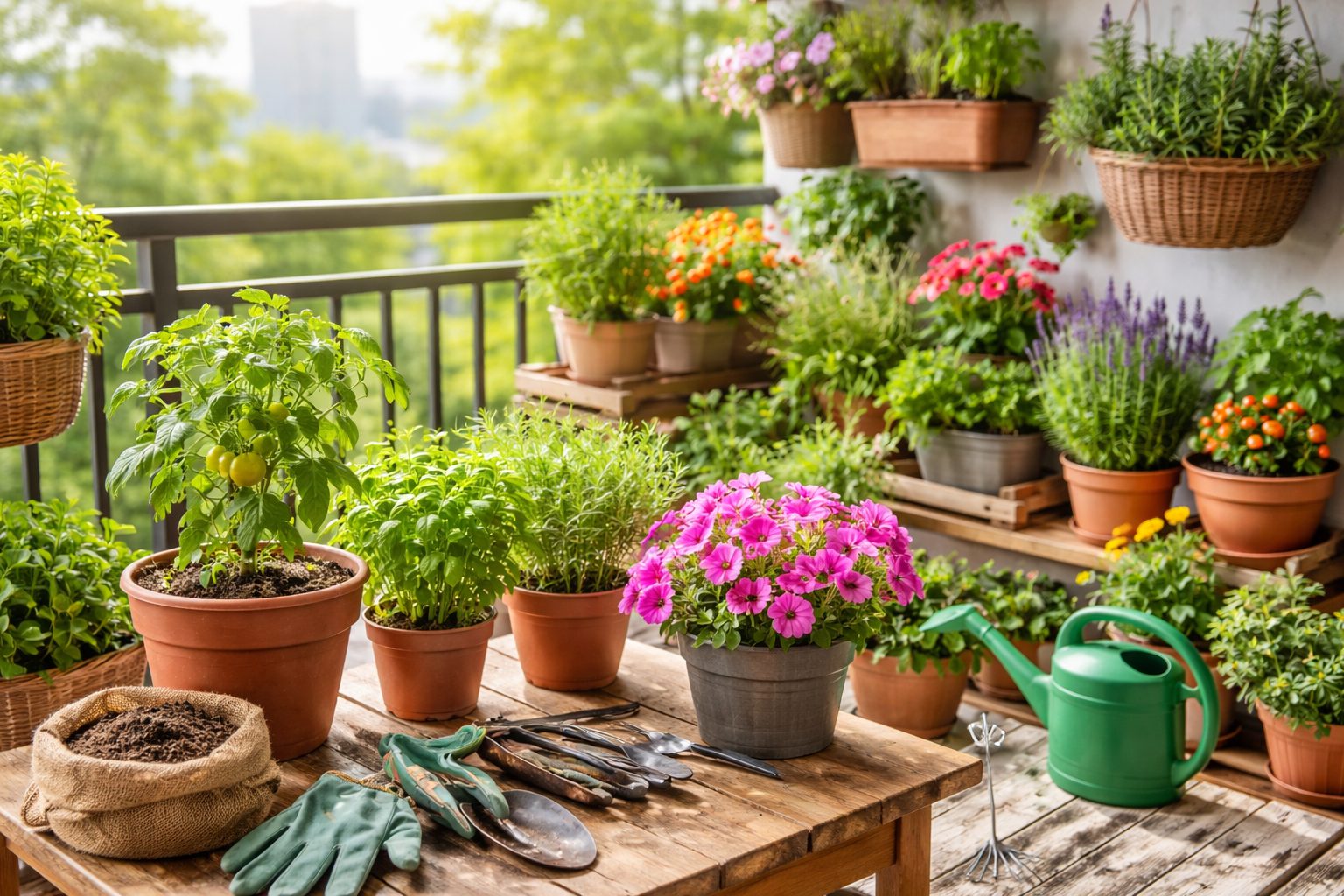
Urban container gardening ideas are perfect when you’ve got more “city space” than “yard space.” A balcony, a sunny front step, a tiny patio, even a little corner by a fence can turn into a legit mini garden with the right setup.
This guide keeps it simple and realistic: easy layouts, beginner-friendly plants, and the little tricks that make containers work in hot, windy, small-space conditions.
📦 What You’ll Learn
- How to pick the best “micro-spot” for sun in an urban space
- Easy container garden layout ideas for balconies, patios, and small yards
- What to grow first (so you actually get wins, not frustration)
- Simple watering + soil shortcuts that prevent most beginner problems
- How to handle wind, heat, and tight spaces without overcomplicating it
🔗 Related Container Gardening Guides
🌿 Urban Container Gardening Ideas: Simple Setups for Small Spaces
If you’ve ever looked at your balcony (or that tiny patio slab) and thought, “There’s no way I can grow anything here”… you’re exactly who container gardening is for.
The secret isn’t having more space. It’s using the space you already have in a smart way. Let’s build your garden like a beginner: small, forgiving, and set up for easy wins.
☀️ Step 1: Find Your “Micro-Sun Spot” (Even If It’s Small)
In urban spaces, sunlight can be weird. One side of the balcony is blazing hot, the other side is basically a cave. Instead of guessing, do this:
- 🌞 Pick 2–3 spots where you could place containers.
- 🕒 Check them in the morning, midday, and late afternoon.
- 📝 Note which spot gets the most direct sun (even if it’s only 4–6 hours).
Most leafy greens and herbs can work with less sun. Fruiting plants like tomatoes and peppers want more. If you want the full “setup basics” breakdown, your hub is here: Container Gardening Tips.
🪴 Step 2: Choose Containers That Match Your Space (Not Your Fantasy)
A container garden fails fast when the containers don’t fit the space. Too big and you can’t move them. Too small and they dry out constantly. Here’s the beginner-friendly way to think about it:
- ✅ Herbs + greens: 6–10 inch pots or window boxes
- ✅ Peppers + bush tomatoes: 3–5 gallon containers
- ✅ Cucumbers (compact) + larger crops: 5–10 gallon containers + a support
If you’re not sure what to buy (and what’s a waste of money), start here: Best Containers for Growing Vegetables.
🧩 7 Urban Container Garden Layout Ideas That Actually Work
These are “real life” layouts for balconies and small patios — not magazine setups that require a rooftop penthouse.
1) The “Corner Trio” (Best beginner layout)
Put three containers in a triangle in your sunniest corner:
- 🪴 One tall container (tomato/pepper)
- 🌿 One medium container (basil/parsley/greens)
- 🥬 One wide, shallow container (lettuce/spinach)
This gives you height, variety, and a little “garden feel” without clutter.
2) The Balcony Rail Line
If you’ve got railing space, use rail planters or slim boxes for:
- 🌿 Herbs (mint, thyme, chives)
- 🥬 Leafy greens
- 🌸 Flowers to attract pollinators
Tip: Keep heavier fruiting plants on the floor for stability (wind is real up there).
3) The “Wall + Floor” Combo
One vertical element + two floor pots is the sweet spot for small spaces:
- 🧱 A wall trellis or ladder shelf
- 🪴 Two sturdy floor containers for the “main” plants
You get more growing room without turning the balcony into an obstacle course.
4) The Rolling Cart Garden (Apartment-friendly)
A rolling cart or plant caddy lets you chase sun and dodge extreme weather:
- 🌞 Roll into sun during the day
- 🌬️ Roll back during high wind
- 🌧️ Pull under cover during heavy rain
5) The “One Big Pot + Support” Setup
If you only have room for one main container, make it count:
- 🍅 One 10–15 gallon pot with a compact tomato or cucumber
- 🪵 Add a trellis/cage so the plant grows up, not out
6) The Window Ledge Grow Zone
If you have a sunny window ledge (or a narrow shelf near a window), use it for:
- 🌿 Kitchen herbs
- 🌱 Seed starting in small trays
Keep a drip tray under everything. Your future self will thank you.
7) The “Mix + Match” Pollinator Corner
Urban gardens do better when you invite helpful insects. Add one small flower pot:
- 🌼 Marigolds
- 🌸 Nasturtiums
- 💜 Lavender (if you have strong sun)
It boosts pollination and makes the space feel alive.
🥗 What to Grow First (Urban Beginner “Easy Wins” List)
If you want fast confidence, start with plants that forgive mistakes and still produce.
- ✅ Herbs: basil, chives, parsley, thyme (easy + useful)
- ✅ Greens: lettuce, spinach, arugula (quick harvests)
- ✅ Peppers: usually tougher than tomatoes in containers
- ✅ Cherry tomatoes: best beginner tomato option
- ✅ Radishes: fast, satisfying, low drama
Want a more veggie-focused breakdown? This page is a good companion: Container Gardening Vegetables for Beginners.
🧱 Soil Shortcut: Don’t Overthink It (But Don’t Use Yard Dirt)
This is where many beginners accidentally sabotage themselves: using heavy soil that turns containers into bricks.
- ✅ Use a quality potting mix (not garden soil).
- ✅ Add a little compost if you have it (optional, not required).
- ✅ Make sure your containers have drainage holes.
Real talk: “Perfect soil” isn’t the goal. Consistent watering + decent potting mix beats fancy recipes every time.
💧 Watering in the City: The 2-Minute Routine That Works
Containers dry out faster than in-ground gardens — especially on balconies where wind hits hard. Here’s a simple routine that prevents most problems:
- 🌅 Check pots in the morning (stick your finger 1–2 inches down).
- 💧 If it’s dry, water slowly until you see drainage.
- 🌆 On hot days, do a second quick check late afternoon.
Tip: It’s better to water deeply less often than “sip water” every day. Deep watering helps roots grow stronger.
🌬️ Wind + Heat: The Urban Problems Nobody Warns You About
Balconies and patios can turn into little weather machines. Wind dries pots fast. Heat bakes containers. Here’s how to keep it manageable:
- 🧱 Group containers together to reduce wind exposure.
- 🪵 Use heavier pots for tall plants (or place them in a larger outer pot for stability).
- 🌤️ Add light shade in extreme heat (even a simple umbrella helps).
- 🧺 Avoid tiny black pots in full sun unless you’re committed to frequent watering.
🐛 Pest Prevention Without Going Full “Garden Panic”
Urban gardens can still get pests, but you don’t need to go nuclear. Start with the basics:
- 👀 Check leaves (especially the underside) twice a week.
- 🚿 Blast aphids off with water early (surprisingly effective).
- ✂️ Remove badly damaged leaves so the plant stops wasting energy.
- 🌼 Keep one flower pot nearby to encourage beneficial insects.
🌿 Herbs Are the Best Urban “Starter Crop”

If you want the easiest possible win, start with herbs. They grow fast, tolerate containers well, and you’ll actually use them.
If you’re building a little kitchen garden, bookmark this: Container Gardening for Herbs.
🏠 Quick Note: What’s Different About Indoor Containers?
Indoor container gardening can work, but it’s a different game. Outdoors, you’re managing sun + watering. Indoors, you’re usually managing light first.
- 💡 Most homes don’t have enough light for fruiting vegetables without a grow light.
- 🌿 Herbs and greens can work near a bright window.
- 💧 Indoor pots dry slower, so overwatering is more common indoors.
If you mainly want indoor ideas, keep that as a separate guide so this post stays focused.
❓ FAQs
How many containers should I start with?
Start with 2–4 containers. It’s enough to learn watering and sunlight patterns without getting overwhelmed.
Do I need “special” pots for container gardening?
Not really. You need containers that fit your plants, have drainage, and don’t topple easily in wind. Fancy isn’t required.
What’s the biggest beginner mistake in urban container gardening?
Overcrowding. Too many pots in a tight space makes watering harder, airflow worse, and the whole setup stressful to maintain.
Can I grow vegetables with only 4–5 hours of sun?
Yes, but choose smart: leafy greens, many herbs, and some peppers can still do okay. Tomatoes usually want more sun.
Should I use saucers under pots on a balcony?
If you’re above someone, yes—use saucers or trays to avoid dripping. Just don’t let pots sit in standing water all day.
How do I keep my balcony garden from looking cluttered?
Use a simple layout (like the corner trio), repeat container styles, and leave walking space. A little negative space makes it feel intentional.
🌼 Conclusion: Start Small, Then Build Your “City Garden”
Urban container gardening doesn’t need a huge budget or a perfect setup. It needs a sunny spot, a few containers that fit your space, and plants that give you quick wins.
If you want the simplest next step: pick one layout (like the corner trio), plant 2–3 easy growers, and run your watering routine for two weeks. Once that feels easy, add one more container.
And if you want the complete hub guide with deeper tips on soil, watering, and troubleshooting, head here next: Container Gardening Tips.
Related Content
Related Content


Visit my Amazon Influencer Page for videos and gardening products Grow Your Own Garden