
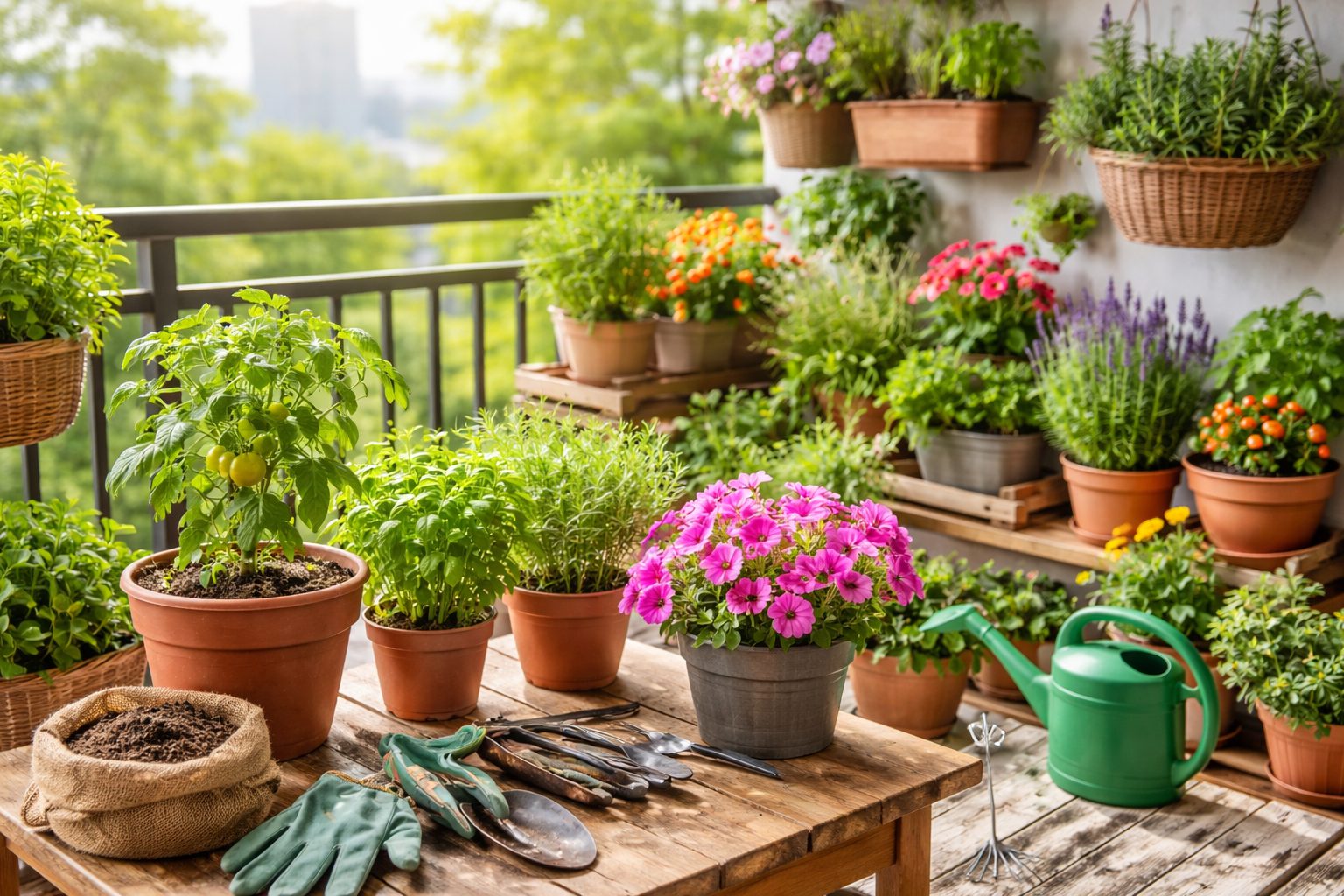
If your balcony plants aren’t thriving, you’re not alone. Most beginner balcony gardens struggle for the same handful of reasons—and once you know what they are, the fixes are usually simple.
📦 What You’ll Learn
- 🌿 The most common balcony gardening mistakes beginners make (and why they happen)
- 🌞 How to match plants to your real sunlight (not your hopes)
- 🪴 The container + soil combos that prevent root problems
- 🚿 Watering habits that stop the “overwater / underwater” loop
- 💨 How to protect your plants from wind, heat, and balcony microclimates
Balcony Gardening Mistakes Beginners Make: And How to Fix Them
Balcony gardening looks easy on social media—some cute pots, a few herbs, and boom… mini jungle. Then real life shows up: the basil droops, the tomato flowers fall off, and something starts chewing holes in your leaves like it pays rent.
Here’s the truth: balconies are not tiny backyards. They’re their own weird little climate. Wind tunnels, reflective heat, shade from buildings, and containers that dry out fast—your plants feel all of it.
So instead of giving you generic “garden advice,” this guide focuses on the mistakes beginners actually make on balconies—and the quick fixes that get you back on track without starting over.
🌿 Why Balcony Gardening Is Different From Yard Gardening
If you’ve ever followed backyard gardening tips and thought, “Why is this not working on my balcony?”—that’s exactly the point. Balcony gardens have constraints that change everything.
Balconies create a tough microclimate
- 💨 Wind is stronger and dries soil and leaves fast
- 🌞 Heat is sharper because railings and walls reflect sunlight
- 🪴 Root space is limited so plants can’t “search” for water like they do in ground
- 🏙️ Shade shifts as buildings block sun at different times
Beginners usually lose momentum for one reason
Most beginners don’t quit because they “can’t garden.” They quit because their plants give confusing signals—yellow leaves, slow growth, drooping, pests—and they don’t know which problem is the real one.
So we’re going to simplify it: find the mistake, fix the cause, and make your routine easier from here on out.
❌ Mistake #1: Choosing Plants Before Understanding Your Sunlight
This is the #1 balcony gardening mistake because it’s invisible at first. You buy plants you like, put them outside, and they look fine for a week. Then the slow decline starts.
Why this happens on balconies
- 🌤️ “Bright” doesn’t always mean “direct sun”
- 🏢 Buildings create patchy light and sudden shade
- 🧱 Walls can reflect heat even when sun time is short
How to fix it
- 🌞 Track your sun for one full day (morning, midday, late afternoon)
- 🕒 Count direct sun hours (not just “it’s bright out there”)
- 🪴 Match plants to your conditions:
- Full sun (6–8+ hours): tomatoes, peppers, many herbs
- Part sun (3–6 hours): leafy greens, some herbs, many flowers
- Shade (0–3 hours): shade plants, some greens, hardy foliage plants
Quick sanity check: If you’re trying to grow fruiting crops (tomatoes/peppers/cukes) with only 2–3 hours of sun, you’ll fight that battle all season. Swap to leafy greens and herbs and you’ll suddenly feel like a gardening wizard.

❌ Mistake #2: Overcrowding a Small Balcony
It’s tempting to fill every inch with pots (because it looks awesome)… until you realize you can’t water properly, air can’t move, and pests throw a party.
Why overcrowding backfires
- 🦟 More pests and disease from poor airflow
- 🚿 Watering becomes messy and inconsistent
- 🌿 Plants compete for light and stretch toward it
How to fix it (without giving up the “lush” look)
- ✅ Start with 3–5 main containers and learn your balcony first
- 🧺 Add “lushness” with one trailing plant instead of five separate pots
- 📏 Leave breathing room: aim for a few inches between pots when possible
You can still have that “green wall” vibe—just build it intentionally instead of stacking pots like a plant Jenga tower.
❌ Mistake #3: Using the Wrong Containers
A lot of balcony gardening frustration is really “container problems” wearing a disguise. The plant looks sick, but the pot is the issue.
Common container mistakes
- 🚫 No drainage holes (root rot waiting to happen)
- 🪴 Too small for the plant (constant drying + stunted growth)
- 🧱 Heavy pots clustered in one area (and sometimes building restrictions)
How to fix it
- 💧 Always use drainage holes (or use a nursery pot inside a decorative outer pot)
- 📦 Match pot size to plant type:
- Herbs: usually 6–10 inches deep is plenty
- Leafy greens: shallow-to-medium containers work great
- Tomatoes/peppers: bigger containers = easier watering and better yield
- Root crops (carrots): deep containers matter more than wide ones
- 🪶 If weight matters, go lightweight: plastic/resin/fabric grow bags
❌ Mistake #4: Overwatering or Underwatering
Balcony watering is tricky because containers don’t behave like ground soil. And beginners usually swing between extremes: “I water every day” or “I water when I remember.”
Why balcony pots dry out fast
- 💨 Wind pulls moisture out of soil and leaves
- 🌞 Sun heats containers from all sides
- 🪴 Small pots hold less water (so they punish you faster)
How to fix watering the easy way
- 👆 Use the finger test: poke 1 inch down
- 🚿 Water deeply until it drains out the bottom
- ⏳ Then wait until the top inch dries again (instead of watering “on schedule”)
Beginner-friendly rule: It’s better to water thoroughly less often than to sprinkle a little every day. Light watering trains roots to stay near the surface—and that makes plants even more sensitive to heat.
❌ Mistake #5: Ignoring Wind Exposure
Wind is the silent balcony plant killer. You might not notice it until your basil looks like it got into a fight and your soil dries out overnight.
What wind does to balcony plants
- 🍃 Tears leaves and snaps tender stems
- 💧 Causes fast dehydration (even if the soil is moist)
- 🌱 Stunts growth because the plant stays in “survival mode”
How to fix it
- 🧱 Use simple windbreaks (privacy screen, trellis, outdoor fabric)
- 🪴 Put the most delicate plants behind sturdier ones
- 🪵 Stake tall plants early (don’t wait until they start leaning)
❌ Mistake #6: Using Garden Soil in Containers
Garden soil feels “natural,” but in containers it becomes dense, heavy, and airless. Roots struggle, water drains poorly, and suddenly your plant looks thirsty and waterlogged at the same time (yep, that’s a real thing).
Why garden soil fails in pots
- 🧱 Compacts easily and suffocates roots
- 💧 Holds water unevenly (wet bottom, dry top)
- 🪰 Can bring pests along for the ride
How to fix it
- 🪴 Use a quality potting mix made for containers
- 🌿 If needed, lighten it with perlite or coco coir
- ♻️ Top-dress with compost for a slow nutrient boost
❌ Mistake #7: Forgetting About Weight Limits and Safety
This isn’t the fun part, but it matters. Balconies can have weight rules, and even when they don’t, you never want all your heavy pots clustered on one side.
How to fix it
- ⚖️ Spread pots out instead of creating a “heavy corner”
- 🪶 Choose lighter planters and lighter potting mix when needed
- 🧾 Check building guidelines before adding multiple large containers
❌ Mistake #8: Expecting Instant Results and Overcorrecting
One droopy leaf doesn’t mean your plant is doomed. Beginners often “panic-fix” and accidentally make things worse—moving plants daily, watering too often, or changing three things at once.
How to fix it
- 🧠 Change one variable at a time (light OR watering OR container—pick one)
- 🗓️ Give the plant 5–7 days to respond before you judge the fix
- 📝 Take quick notes (seriously—future you will thank you)
🌱 Simple Balcony Gardening Rules That Prevent Most Mistakes
- ✅ Start smaller than you think you need
- ✅ Choose plants based on your real light hours
- ✅ Use containers with drainage and proper potting mix
- ✅ Water deeply, then wait (don’t “sip-water” daily)
- ✅ Protect from wind and extreme heat
If you follow those five rules, you automatically avoid about 80% of beginner balcony gardening problems. The rest are just small adjustments—and you’ll spot them faster now.
🌿 Related Balcony Gardening Guides
Frequently Asked Questions
What is the most common balcony gardening mistake?
The most common mistake is choosing plants before understanding your balcony’s sunlight. When plants don’t match the light you actually have, everything feels harder than it should.
How many plants should a beginner start with on a balcony?
A great starting point is three to five containers. That’s enough to feel exciting without becoming stressful to water and manage.
Why do balcony plants dry out so fast?
Balconies tend to be windier and hotter than ground gardens, and containers hold less water than in-ground soil. Smaller pots, full sun, and strong wind can dry plants quickly.
Can I fix a struggling balcony plant?
Yes. Most struggling balcony plants can recover once you correct the main issue—usually light, watering habits, container size, or potting mix.
Do balcony plants need different soil than garden plants?
Yes. Container plants do best with a potting mix made for containers. Garden soil compacts in pots and can cause drainage and root problems.
Conclusion
Balcony gardening mistakes don’t mean you’re bad at this. They mean you’re learning the rules of a different environment. Once you match plants to your light, simplify your container setup, and water in a more consistent way, your balcony garden gets easier—and a lot more fun.
Fix the basics first, then build from there. Before you know it, you’ll look out at your balcony and realize it finally feels like a real little garden… not a “plant rescue mission.”
Balcony Gardening for Beginners: The Complete Guide to Growing Plants in Small Spaces
Related Content

Related Content


Visit my Amazon Influencer Page for videos and gardening products Grow Your Own Garden