

Small space vegetable gardening is how you grow real food when you don’t have a big yard.
A balcony. A patio. A few containers by the door. Even a narrow strip of sun along a fence. If you’ve got a little light and a little patience, you’ve got enough to start.
This pillar is your “choose the right approach” guide. You’ll learn what actually works in tight spaces, which vegetables give beginners quick wins, and how to avoid the most common mistakes that make small gardens feel harder than they need to be.
📦 What You’ll Learn
- How to pick the best small-space setup (containers, balcony, patio, tiny yard)
- How much sun vegetables really need (and what to grow with less)
- The easiest vegetables to grow in limited space
- Simple “grow more in less room” strategies (without turning it into a jungle)
- Beginner mistakes that kill yields—and the quick fixes
🔗 Related Guides (Use These Together)
🥕 Small Space Vegetable Gardening: Easy Ways to Grow Food Anywhere

The best part about growing vegetables in small spaces is this: you don’t need a perfect garden. You need a setup you’ll actually maintain. The biggest “secret” is choosing a method that matches your space and your daily routine.
So instead of trying to copy someone else’s backyard garden, we’re going to build a small-space plan that fits your reality—then you can scale up once the first few plants feel easy.
📏 What Counts as a “Small Space” Vegetable Garden?
If you can’t spread out, you build up—or you grow smarter. Small space vegetable gardening usually looks like one of these:
- 🌇 Balcony: limited floor space, wind exposure, microclimates
- 🪟 Patio or deck: more stability, easier layout options
- 🪴 Containers by a doorway or driveway: easy access, flexible placement
- 🌱 Tiny yard or side yard: small beds, tight rows, vertical supports
You don’t need to identify as “an urban gardener” to use these strategies. If space is limited, this is your playbook.
🧩 The 4 Best Small-Space Methods (Pick One to Start)
Most beginners get stuck because they try to do everything at once. Choose one method first. Win with it. Then expand.
1) 🪴 Container Gardening (Best for beginners + renters)
Containers are the easiest entry point because you can control soil, move plants, and start with just a few pots.
- ✅ Great for: renters, patios, driveways, small yards, beginners
- ✅ Biggest advantage: flexibility (move pots for sun and weather)
- ⚠️ Biggest challenge: watering (pots dry faster)
If containers are your main method, start here: Container Gardening Tips.
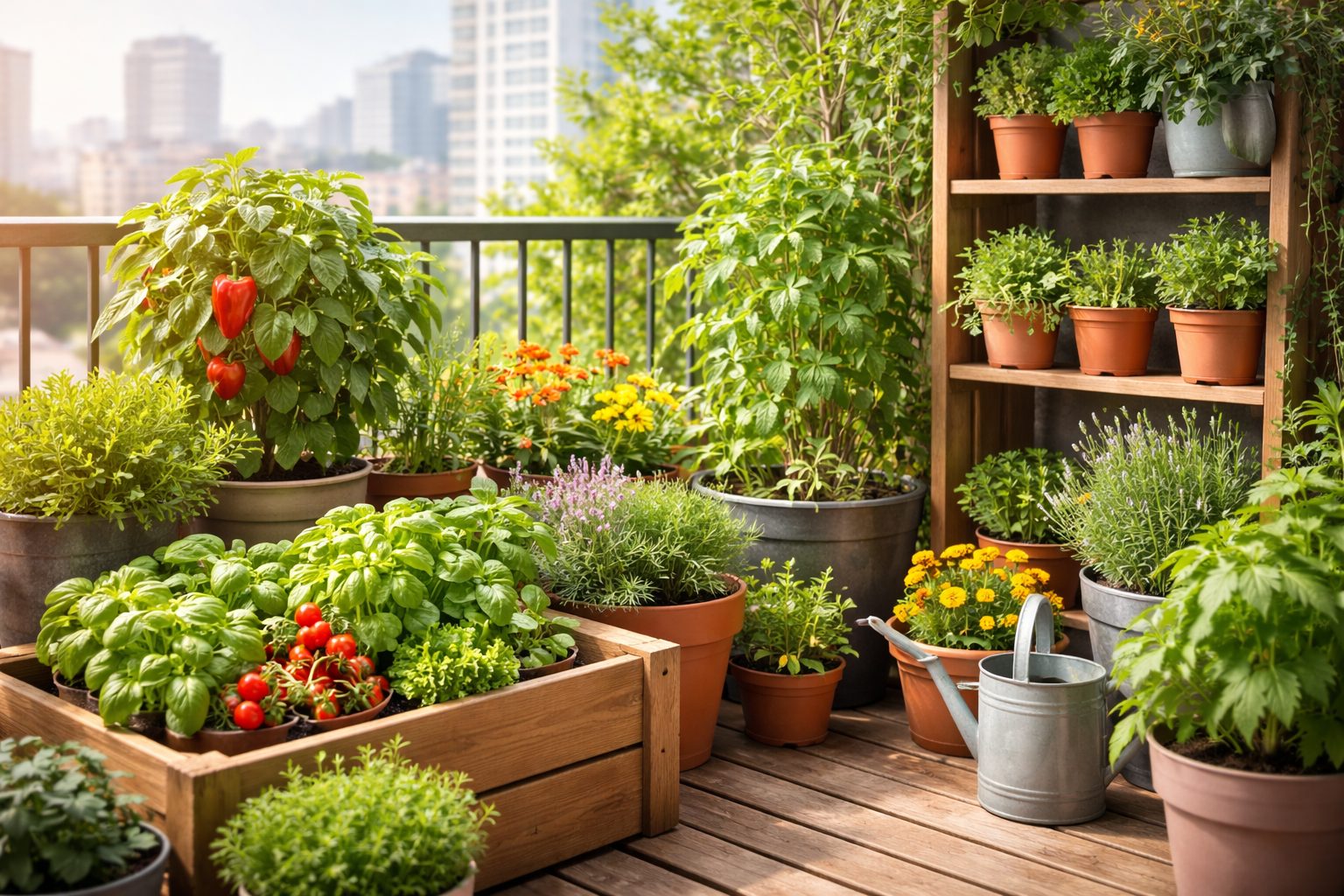
2) 🌇 Balcony Vegetable Gardening (When you’re working vertical)
Balconies grow great food, but they have their own rules: wind, heat reflection, and limited root space.
- ✅ Great for: salad greens, herbs, peppers, cherry tomatoes, compact varieties
- ✅ Biggest advantage: easy access (you’ll check plants more often)
- ⚠️ Biggest challenge: microclimate (wind + sun patterns can be extreme)
Use these as your balcony foundation: Balcony Gardening and Balcony Vegetable Gardening.
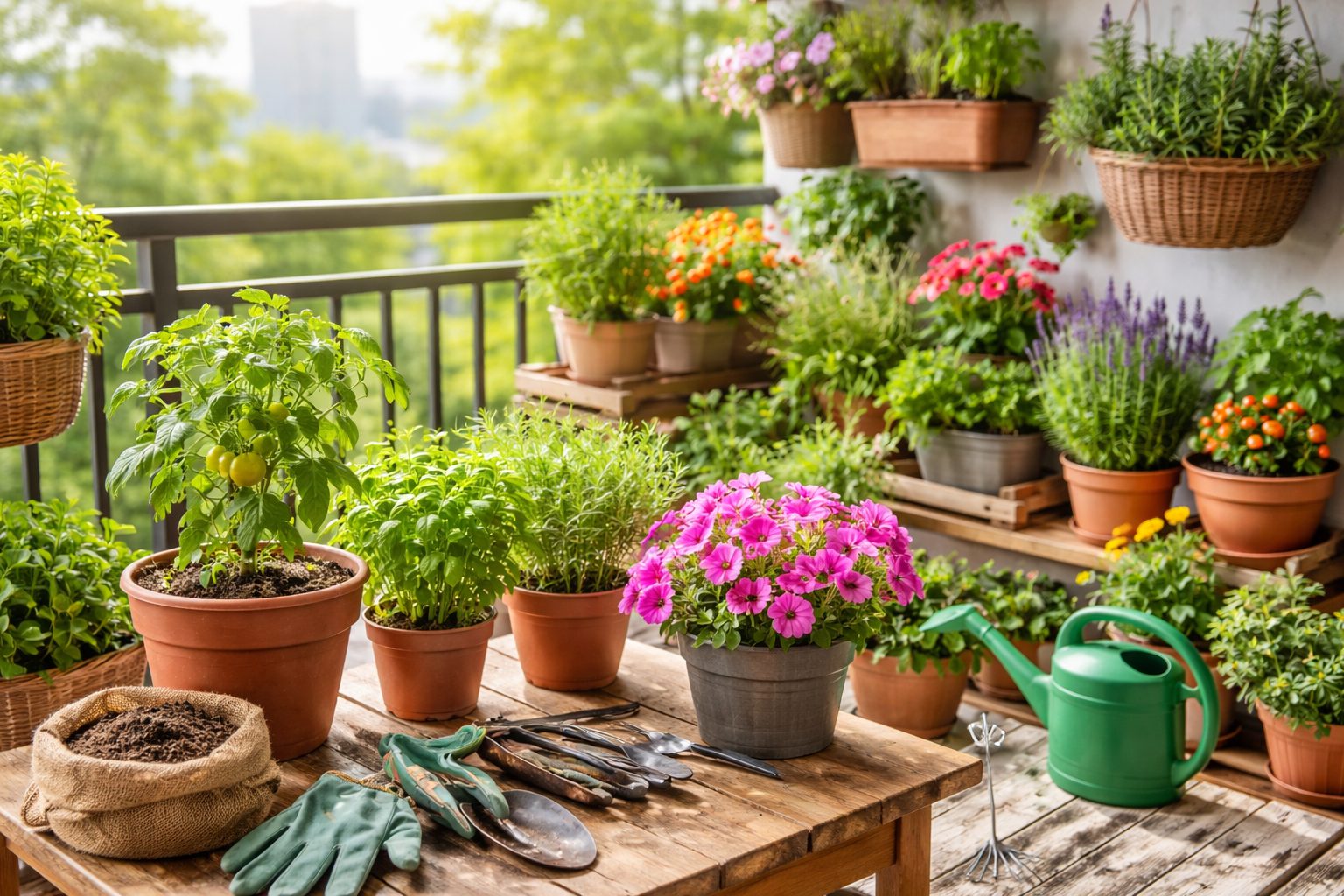
3) 🪑 Patio & Deck Gardening (Small layout, big results)
Patios and decks give you enough “footprint” to organize plants in a clean layout. This is where small-space gardens start to feel like real gardens.
- ✅ Great for: container groups, rolling carts, trellises, larger pots
- ✅ Biggest advantage: you can create zones (greens here, fruiting plants there)
- ⚠️ Biggest challenge: heat (surfaces can cook roots in mid-summer)
4) 🌱 Tiny Yard / Side Yard Gardening (When in-ground makes sense)
If you have a small strip of soil with decent sun, in-ground growing can be low-maintenance once it’s set up—but it’s less flexible than containers.
- ✅ Great for: sturdy greens, herbs, a couple productive plants (not 12 varieties)
- ✅ Biggest advantage: less watering stress than containers
- ⚠️ Biggest challenge: soil quality + pests + limited “do-over” flexibility
☀️ How Much Sun Do Vegetables Really Need?
This is where most small-space plans either succeed or fail. Vegetables aren’t all the same. Some need full sun. Others are happy with “pretty good” light.
- 🌞 6–8+ hours: tomatoes, cucumbers, squash, many peppers
- ⛅ 4–6 hours: greens, many herbs, some peppers, radishes
- 🌤️ Bright shade / limited direct sun: herbs + leafy greens (results vary)
Small space tip: you don’t need “perfect sun” everywhere. You just need one reliable sunny zone—then build your garden around it.
🥗 Best Vegetables for Small Spaces (Beginner “Easy Wins”)
If you want fast confidence, start with plants that forgive mistakes and still give you something to harvest.
🥬 Leafy Greens (fast + satisfying)
- Lettuce, arugula, spinach, baby kale
- Great for: railing planters, shallow pots, window boxes
🌿 Herbs (small footprint, big payoff)
- Basil, parsley, chives, thyme, oregano
- Great for: sunny corners, small pots, mixed containers
🌶️ Compact Fruiting Plants (choose the right varieties)
- Peppers (often easier than tomatoes in containers)
- Cherry tomatoes (best beginner tomato choice)
- Bush beans (productive without taking over)
🥕 “Quick Win” Crops (fast harvests)
- Radishes, green onions, baby carrots (in deeper containers)
If you’re gardening from an apartment-style setup, this is a helpful companion: Best Vegetables to Grow in an Apartment.
📈 How to Grow More Food in Less Space (Without Overcrowding)
You don’t need more pots—you need a better strategy. These are the small-space upgrades that actually matter:
- ⬆️ Grow vertical: trellis cucumbers, tomatoes, peas (use supports early)
- 🪴 Use “one big pot” instead of three small ones: larger pots hold moisture and reduce stress
- 🔁 Succession plant greens: re-seed small batches every 2–3 weeks
- 🎯 Choose compact varieties: patio tomatoes, bush cucumbers, dwarf options
- 🧺 Group containers: creates shade for soil and reduces wind drying
If you want ready-to-copy layout ideas for city spaces, this is your next read: Urban Container Gardening Ideas.
🚫 Common Small Space Vegetable Gardening Mistakes (And Quick Fixes)
1) Overcrowding
More plants sounds better—until everything dries out faster, airflow drops, pests increase, and you stop enjoying it.
- ✅ Fix: Start with 2–4 containers. Add more only after your routine feels easy.
2) Using tiny pots for big plants
Small pots dry out constantly and stunt fruiting crops.
- ✅ Fix: Give fruiting plants 3–5 gallons minimum (more is better).
3) Fighting your sunlight
Trying tomatoes in shade is a long, frustrating season.
- ✅ Fix: Put “sun-hungry” plants in your best sun zone, and put greens/herbs in the rest.
4) Inconsistent watering
Small-space gardens fail more often from watering mistakes than anything else.
- ✅ Fix: Quick morning check + deep watering when dry. Keep it boring and consistent.
5) Starting too complicated
When the setup feels like a project, it’s easier to quit.
- ✅ Fix: One method, a few plants, and an easy routine. That’s how you build momentum.
🧠 How to Choose the Best Setup for Your Space (Simple Decision Guide)
- If you’re renting or need flexibility → containers are your best friend.
- If you have a balcony → treat it like a microclimate and focus on compact plants.
- If you have a patio/deck → build zones and use a trellis for vertical growing.
- If you have a small strip of soil → keep it simple and grow a few high-value plants well.
Still not sure? Start with containers. They teach you the fastest, and you can adjust as you learn.
❓ FAQs
How many vegetables should I start with in a small space?
Start with 2–4 plants (or containers). That’s enough to learn sunlight and watering patterns without getting overwhelmed. Once that feels easy, add one more.
Can I grow vegetables without full sun?
Yes. Leafy greens and many herbs can grow with 4–6 hours of sun (sometimes less). Fruiting crops like tomatoes usually need more direct sunlight to produce well.
What is the easiest vegetable to grow in a small space?
Leafy greens are the easiest for most beginners because they grow fast, don’t need deep soil, and you can harvest them gradually.
Is container gardening the best option for beginners?
For most small-space beginners, yes. Containers are flexible, easy to start, and let you control soil and placement—especially helpful if you’re renting.
How do I increase yields when space is limited?
Focus on vertical growing, use larger containers for fruiting plants, choose compact varieties, and plant leafy greens in small successions instead of all at once.
🌼 Conclusion: Start Small, Harvest Something, Then Expand
Small space vegetable gardening isn’t about cramming in as many plants as possible. It’s about creating a setup you’ll actually keep up with—then letting your garden grow as your confidence grows.
If you want a simple next step: choose one method (containers are easiest), pick two “easy wins” (greens + herbs), and run a consistent watering routine for two weeks. After that, add one fruiting plant like a pepper or cherry tomato.
Ready to go deeper based on your setup? Start here: Container Gardening Tips or Balcony Gardening.
📚 References & Further Reading
- University of Minnesota Extension – Container Gardening
Practical guidance on choosing containers, soil, and plants for growing vegetables in limited space.
- Penn State Extension – Container Vegetable Gardening
Covers vegetable selection, container size, watering, and common problems for small-space gardens.
- University of Illinois Extension – Container Vegetable Gardening
Beginner-friendly overview of growing vegetables in pots, patios, and small urban areas.
- University of Missouri Extension – Gardening in Containers
Detailed extension publication on container selection, drainage, and managing vegetables in confined spaces.
- Oklahoma State University Extension – Container Gardening
Explains container gardening basics with emphasis on vegetable growth, watering, and sun exposure.
Related Content
Related Content


Visit my Amazon Influencer Page for videos and gardening products Grow Your Own Garden